
Sensory Integration Therapy in Ghaziabad: Helping Children Develop Strong Fine Motor Skills for Everyday Success
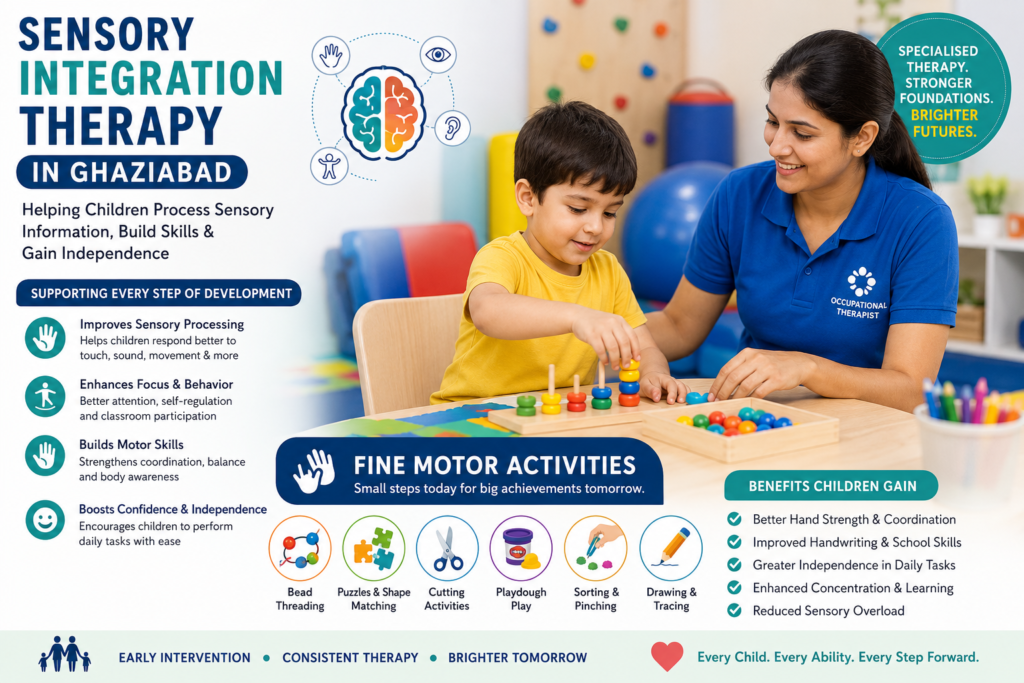
Children learn about the world through their senses. They touch, see, hear, smell, taste, and move to understand their surroundings. However, for some children, the brain finds it difficult to process this sensory information effectively. This can affect their ability to concentrate, communicate, play, write, or complete everyday activities independently. This is where Sensory Integration Therapy in Ghaziabad plays a significant role in supporting healthy child development.
Along with improving sensory processing, therapists also focus on Fine Motor Activities and Fine Motor Skills Activities that strengthen the muscles of the hands and fingers. These essential skills help children perform daily tasks confidently while improving academic performance and overall independence.
What is Sensory Integration Therapy?
Sensory Integration Therapy in Ghaziabad is a specialised occupational therapy approach that helps children organise and respond appropriately to sensory information. Through structured, play-based activities, therapists help children improve their ability to process touch, movement, balance, sound, and body awareness.
Children experiencing sensory processing challenges may:
- Avoid certain textures or sounds
- Seek excessive movement
- Have poor balance or coordination
- Become easily distracted
- Struggle with handwriting
- Find dressing or feeding difficult
Sensory integration therapy helps children become more comfortable, confident, and independent during everyday activities.
Why is Sensory Integration Therapy Important?
When children cannot process sensory information efficiently, even simple daily routines can become challenging. Difficulty sitting in class, holding a pencil, following instructions, or participating in group activities may affect both learning and confidence.
With professional Sensory Integration Therapy in Ghaziabad, children gradually learn to:
- Improve attention and concentration
- Respond appropriately to sensory input
- Develop better balance and coordination
- Increase body awareness
- Build confidence during school and play activities
- Perform everyday tasks more independently
The therapy is always customised according to each child’s developmental needs.
Understanding Fine Motor Skills
Fine motor skills involve small muscle movements in the hands, fingers, and wrists. These movements are essential for many everyday activities that children perform at home and school.
Examples include:
- Holding a pencil correctly
- Colouring within lines
- Cutting paper with scissors
- Buttoning shirts
- Zipping jackets
- Using spoons and forks
- Opening lunch boxes
- Turning book pages
Without strong fine motor control, children may struggle with classroom learning and self-care activities.
What are Fine Motor Activities?
Fine Motor Activities are simple, engaging exercises that improve finger strength, hand control, coordination, and precision. These activities are often introduced during occupational therapy sessions and can also be practised at home.
Some popular fine motor activities include:
- Bead threading
- Building with blocks
- Playdough squeezing and rolling
- Colouring and drawing
- Tracing shapes and letters
- Sorting buttons or coins
- Peg board activities
- Paper folding
- Sticker placement games
- Clothespin exercises
These enjoyable activities strengthen hand muscles while improving concentration and coordination.
Fine Motor Skills Activities That Support Child Development
Regular Fine Motor Skills Activities help children prepare for both academic and daily living tasks. Therapists gradually increase activity difficulty as children improve.
Common activities include:
Pencil Grip Practice
Improves writing control and handwriting quality.
Cutting with Child-Safe Scissors
Develops bilateral coordination and finger strength.
Puzzle Solving
Enhances hand-eye coordination and problem-solving abilities.
Clay and Dough Exercises
Strengthens finger muscles while improving creativity.
Lacing and Threading Games
Improves precision and visual-motor coordination.
Tweezers and Picking Games
Develops finger control and pincer grip.
These activities make learning enjoyable while encouraging consistent progress.
Benefits of Sensory Integration Therapy
Children participating in Sensory Integration Therapy in Ghaziabad often experience improvements in multiple developmental areas.
Better Attention
Children become more focused during classroom learning and daily routines.
Improved Handwriting
Enhanced hand strength and coordination lead to neater, more controlled writing.
Greater Independence
Children perform self-care tasks with increased confidence.
Enhanced Coordination
Balance, body awareness, and movement become smoother and more organised.
Emotional Regulation
Children often become calmer and better able to manage sensory experiences.
Increased Confidence
Successfully completing everyday tasks helps children develop a positive self-image.
Who Can Benefit from Sensory Integration Therapy?
Many children benefit from Sensory Integration Therapy in Ghaziabad, including those with:
- Autism Spectrum Disorder (ASD)
- ADHD
- Sensory Processing Disorder
- Developmental delays
- Learning disabilities
- Cerebral palsy
- Poor handwriting
- Weak hand strength
- Coordination difficulties
Early support allows children to build stronger foundations for lifelong learning.
Supporting Fine Motor Development at Home
Parents play a valuable role in helping children practise skills outside therapy sessions.
You can encourage Fine Motor Activities at home by:
- Drawing and colouring together
- Playing with clay or playdough
- Completing simple jigsaw puzzles
- Building with LEGO or blocks
- Practising buttoning and zipping clothes
- Stringing beads
- Using child-safe scissors
- Helping in the kitchen by stirring or pouring ingredients
Short daily practice sessions can significantly reinforce therapy progress.
Why Early Intervention Matters
Children’s brains develop rapidly during the early years. Addressing sensory and motor challenges during this period leads to better long-term outcomes.
Early intervention through Sensory Integration Therapy in Ghaziabad helps children:
- Build stronger learning foundations
- Improve school readiness
- Develop social confidence
- Reduce frustration and behavioural challenges
- Increase independence in everyday life
The earlier support begins, the greater the opportunity for positive developmental growth.
Choosing the Right Therapy Centre
When selecting a therapy provider, parents should look for:
- Experienced occupational therapists
- Individualised therapy plans
- Child-friendly therapy environment
- Regular progress assessments
- Parent involvement and guidance
- Evidence-based therapeutic approaches
A collaborative approach between therapists and families produces the best outcomes.
Conclusion
Every child deserves the opportunity to develop the skills needed for learning, communication, and independence. Sensory Integration Therapy in Ghaziabad provides structured support that helps children process sensory information more effectively while improving movement, attention, and confidence.
By combining engaging Fine Motor Activities with targeted Fine Motor Skills Activities, children strengthen essential hand movements required for writing, self-care, classroom participation, and everyday success. With early intervention, consistent practice, and professional guidance, children can overcome challenges and achieve meaningful developmental progress.
Frequently Asked Questions (FAQs)
1. What is Sensory Integration Therapy?
Sensory Integration Therapy in Ghaziabad helps children process sensory information more effectively, improving attention, coordination, and daily functioning.
2. What are Fine Motor Activities?
Fine Motor Activities strengthen the small muscles of the hands and fingers needed for writing, dressing, eating, and other daily tasks.
3. Why are Fine Motor Skills Activities important?
Fine Motor Skills Activities improve hand strength, grip, coordination, handwriting, and overall independence.
4. Who needs Sensory Integration Therapy?
Children with autism, ADHD, developmental delays, sensory processing challenges, or coordination difficulties can benefit from therapy.
5. Can parents practise Fine Motor Activities at home?
Yes. Activities like colouring, puzzles, bead threading, playdough, and drawing are excellent ways to improve fine motor skills.